Key Takeaways
- Undue influence is improper pressure that overcomes a settlor’s free will, so the trust reflects someone else’s wishes rather than their own.
- California defines it by statute, weighing the settlor’s vulnerability, the influencer’s authority, the tactics used, and the inequity of the result.
- In certain situations the law presumes undue influence and shifts the burden to the person who benefited — including gifts to drafters and certain caregivers.
- It’s a leading ground for contesting a trust, especially involving elderly or dependent settlors.
- Proving it takes evidence — relationships, circumstances, and often medical and financial records.
What Undue Influence Means
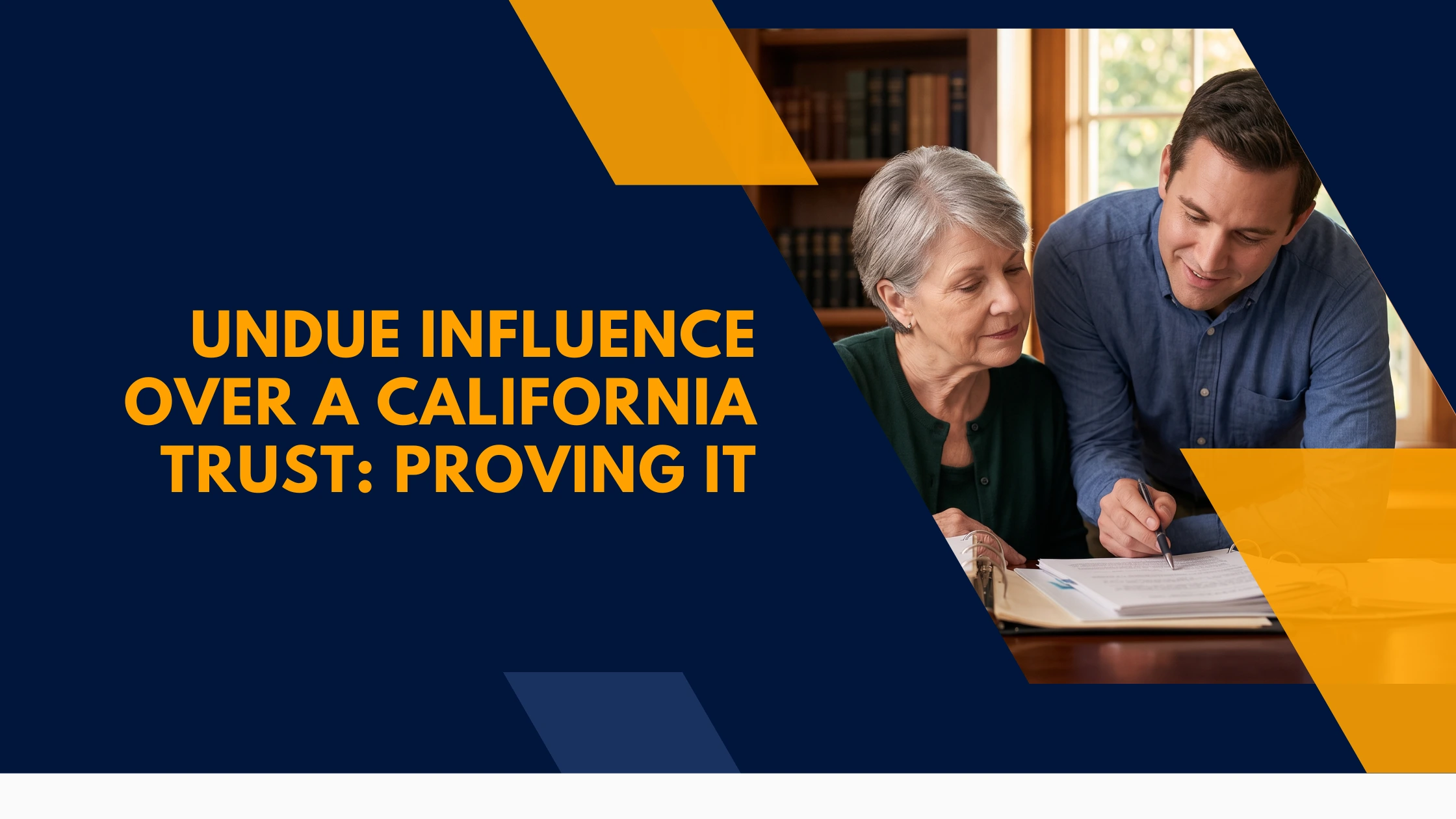
A valid trust has to reflect the free choice of the settlor who made it. Undue influence is what happens when someone applies enough pressure, manipulation, or control that the trust stops reflecting the settlor’s own wishes and starts reflecting the influencer’s. The signature is genuine, but the choice behind it isn’t truly free.
This is one of the most common grounds for challenging a trust or amendment in California — and one of the most fact-intensive. It often arises where a caregiver, a new acquaintance, one child among several, or a trusted advisor ends up with an outsized share through a late amendment, and other family members suspect the change wasn’t really the settlor’s idea. The hard part is rarely suspecting undue influence; it’s proving it — which is where understanding the legal test, and the presumptions that can shift the burden, becomes essential.
How California Defines It
California has a statutory definition of undue influence, and courts weigh it through four sets of factors:
- The victim’s vulnerability — age, illness, cognitive decline, isolation, dependency, or emotional distress that made the settlor susceptible.
- The influencer’s apparent authority — their role and power over the settlor, as a caregiver, family member, fiduciary, or trusted advisor.
- The actions and tactics used — controlling the settlor’s medications, finances, or access to others; isolating them; pushing changes in secrecy or haste; controlling who they saw and when.
- The inequity of the result — whether the outcome is suspicious on its face: a sudden change favoring the influencer, a sharp departure from long-standing intentions, a disproportionate share.
No single factor decides it. Courts look at the whole picture — a vulnerable settlor, someone positioned to exploit that vulnerability, tactics consistent with manipulation, and a result that looks wrong. The more of those that line up, the stronger the case.
When the Law Presumes Undue Influence
Ordinarily, the person challenging the trust must prove undue influence. But in certain situations, California shifts the burden — it presumes undue influence and makes the person who benefited prove it wasn’t present. Two important triggers:
- Confidential relationship plus active participation plus undue benefit. When someone in a confidential or fiduciary relationship with the settlor actively participated in procuring the trust or amendment and then benefited unduly, a presumption of undue influence can arise, shifting the burden onto that person.
- Statutory presumptions for drafters and certain caregivers. California law treats certain donative transfers as presumptively the product of fraud or undue influence — notably gifts to the person who drafted the instrument, to certain care custodians of a dependent adult, and to fiduciaries who transcribed or caused the instrument, with limited exceptions (such as gifts to close relatives or instruments reviewed by an independent attorney).
These presumptions are powerful. They can flip the entire evidentiary battle onto the person who received the gift, which is often decisive. Whether a presumption applies turns on the relationship and the specific facts, and it’s one of the first things worth analyzing in a potential case — because it can change who has to prove what.
Suspect a caregiver or one family member steered a vulnerable relative’s trust? Whether a legal presumption applies can change everything. Bay Legal handles undue-influence trust contests throughout California. For guidance on your specific situation, call (650) 668-8000 or schedule a consultation at baylegal.com/contact.
The Red Flags
Certain patterns recur in undue-influence cases. None proves the claim alone, but together they paint a picture:
- A sudden amendment to a long-standing trust, especially late in life or during illness.
- A new beneficiary who recently entered the settlor’s life, or who arranged for the amendment to be made.
- Isolation — the influencer controlling who the settlor saw, screening calls, moving them away from family.
- Secrecy and haste — changes made quietly, quickly, without the knowledge of family who’d normally be involved.
- Control over the settlor’s finances, medications, or daily care.
- A new attorney chosen by the influencer, or the influencer present during the trust meetings.
- A result that departs sharply from what the settlor long said they wanted.
When several of these appear together, especially with a vulnerable settlor, they’re worth taking seriously.
Proving It Takes Evidence
Undue influence is rarely proven by a single document. Building a case typically means assembling:
- Medical records showing cognitive or physical vulnerability,
- Financial records showing the influencer’s control or unusual transactions,
- Witness testimony from family, caregivers, neighbors, and professionals,
- The circumstances of the amendment — who arranged it, who was present, how fast it happened, who chose the lawyer,
- The drafting attorney’s file and testimony.
This is litigation-intensive work, and the quality of the evidence usually determines the outcome — though a presumption, where one applies, can ease the burden considerably. It’s also emotionally hard, since it means scrutinizing a loved one’s final, vulnerable period. Both realities are reasons to get a candid assessment early.
Undue-influence cases are won on evidence — and presumptions can shift the burden in your favor. Bay Legal can assess whether a presumption applies and help preserve the case. For guidance on your specific situation, call (650) 668-8000 or schedule a consultation at baylegal.com/contact.
How This Fits Together
Undue influence is a primary ground for contesting a trust, frequently overlaps with capacity challenges and financial elder abuse, and runs against the 120-day deadline.
Frequently Asked Questions
What is undue influence over a trust in California?
Improper pressure or manipulation that overcomes a settlor’s free will, so the trust reflects the influencer’s wishes rather than the settlor’s. California weighs the settlor’s vulnerability, the influencer’s authority, the tactics used, and the inequity of the result.
How do you prove undue influence over a trust?
Through evidence — medical and financial records, witness testimony, and the circumstances of the amendment. In some situations the law presumes undue influence and shifts the burden to the person who benefited.
When is undue influence presumed?
Commonly when someone in a confidential or fiduciary relationship actively participated in procuring the trust and benefited unduly, and under statutory rules treating gifts to drafters and certain caregivers as presumptively the product of undue influence, with limited exceptions.
What are the warning signs of undue influence?
Sudden amendments, a new beneficiary who recently appeared or arranged the change, isolation of the settlor, secrecy and haste, control over finances or care, a new attorney chosen by the influencer, and a result that departs sharply from prior intentions.
Is undue influence the same as lack of capacity?
No, though they often overlap. Lack of capacity means the settlor didn’t have the required understanding; undue influence means they understood but were improperly pressured. A contest can involve one, the other, or both.