TL;DR — Key Takeaways
- Most recorded deed errors can be fixed without a court, but which tool fixes them depends on the kind of error.
- A corrective deed, signed by the original grantor, fixes substantive clerical mistakes such as a misspelled name or a wrong legal description.
- A scrivener’s affidavit fixes only a narrow set of minor defects, such as an illegible entry or an incorrect return address. It cannot change who owns what.
- Neither tool can add an owner, remove an owner, or change the deal. That takes a new conveyance or a court.
- An unrecorded deed is generally valid between the parties. What it lacks is protection against someone who later buys or lends in good faith and records first.
- Remote online notarization is not yet available to California notaries as of September 2026.
Most errors in a recorded California deed can be fixed without going to court, but the right fix depends on what went wrong. A corrective deed, signed again by the original grantor and referencing the original recording, handles clerical mistakes like a misspelled name, a wrong legal description, or incorrect vesting. A scrivener’s affidavit handles a narrower set of minor defects. And some problems, particularly where the parties disagree about what the deed was supposed to say, require a court.
The distinction that decides everything is whether the correction changes what the deed actually did.
What recording does, and what it does not
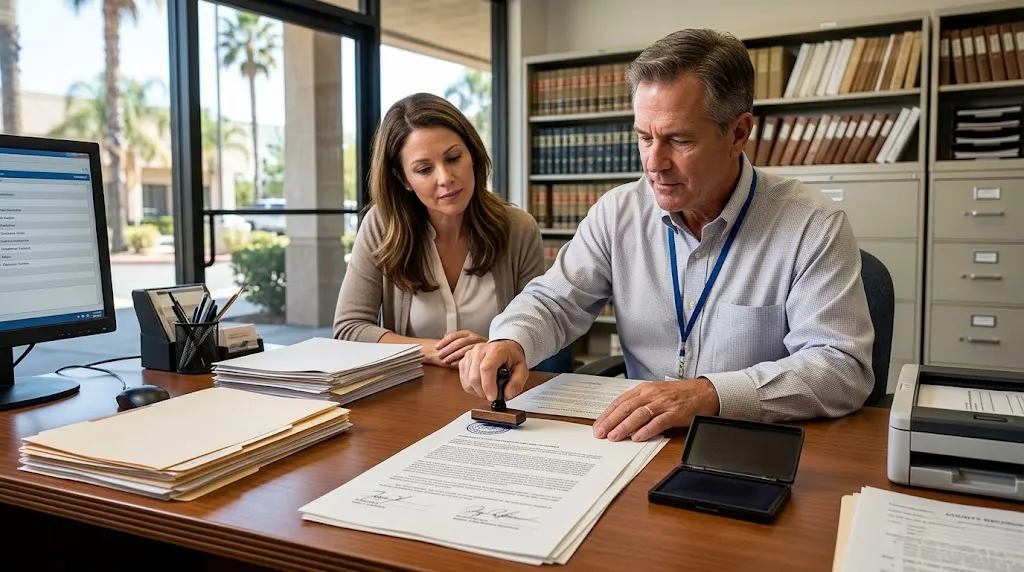
Recording is not what makes a deed valid. A deed transfers title between the parties when it is signed by the grantor and delivered. Civil Code section 1217 provides that an unrecorded instrument is valid as between the parties and those who have notice of it.
What recording does is give constructive notice. Under Civil Code section 1213, a recorded conveyance gives notice to later purchasers and lenders from the time it is filed for record. And under Civil Code section 1214, California follows a race-notice rule: an unrecorded conveyance is void as against a later purchaser or lender who takes for value, in good faith, without notice, and records first.
That is why recording errors matter. A deed with a defect in its recording may be perfectly effective between the people who signed it and still fail to protect the new owner against someone who comes along later.
The two correction tools
Corrective deed
A corrective deed is a new deed, signed and acknowledged by the original grantor, that references the original recorded document and states the correction. It is the standard tool for substantive clerical errors:
- A name misspelled in a way that creates uncertainty about who the grantor or grantee is.
- A legal description that is wrong, incomplete, or describes the wrong parcel.
- Vesting stated incorrectly, such as joint tenancy where community property was intended.
- A wrong assessor’s parcel number that creates confusion about the property conveyed.
The requirement that the original grantor sign is what gives a corrective deed its force, and it is also its limitation. If the grantor has died, become incapacitated, or refuses to cooperate, a corrective deed is not available, and the path runs through a court or the grantor’s estate.
A corrective deed that changes vesting or the property described can have property tax or transfer tax consequences of its own. Confirm with the county assessor before recording.
Scrivener’s affidavit
California law permits a limited affidavit to correct a small set of defects in a recorded document without a new conveyance: an incorrect or missing return address, text that is illegible, an incorrect or missing printed or typed name near a signature, and an incorrect or missing documentary transfer tax amount.
That list is narrow by design. A scrivener’s affidavit cannot correct a legal description, cannot change a name in a way that alters who took title, and cannot fix anything that changes the substance of the transfer. County recorders apply the limits, and a recorder will generally reject an affidavit that reaches beyond them.
If you are looking at a recorded deed with an error and trying to work out which tool fits, that decision is worth getting right before anything is recorded, because a wrong correction adds a second problem to the chain of title. Call Bay Legal at (650) 668-8000 in Northern California or (213) 668-8000 in Southern California.
What neither tool can do
A corrective deed and a scrivener’s affidavit correct the record of what the parties did. They cannot change what the parties did.
So neither tool can add an owner who was never meant to be on title, remove an owner who was, or change the terms of the transaction. Adding or removing an owner requires a new conveyance by the person whose interest is changing, or a court judgment. Removing someone from a California deed without their consent covers the court routes.
The same principle means a correction cannot be used to resolve a disagreement. If the grantor believes the original deed says what they meant and the grantee disagrees, a corrective deed is not available, because the grantor will not sign one.
When a court is needed
Reformation. Where a deed does not reflect what the parties actually agreed, because of a mutual mistake, or a mistake by one party that the other knew or suspected, Civil Code section 3399 allows a court to revise the instrument to express the parties’ true intent. Reformation is the remedy when the grantor will not sign a corrective deed and the error is real.
Quiet title. Where the problem is a competing claim to ownership, such as two deeds conveying the same property or a deed whose validity is in doubt, a quiet title action under Code of Civil Procedure section 760.010 and following asks the court to declare who owns the property.
Cancellation. Where a recorded instrument is void or voidable and leaving it on the record would cause serious harm, a court can cancel it.
Each is a lawsuit, with the time and cost that implies. That is the practical reason to fix what can be fixed administratively while the grantor is available and cooperative.
Missing signatures and missing acknowledgments
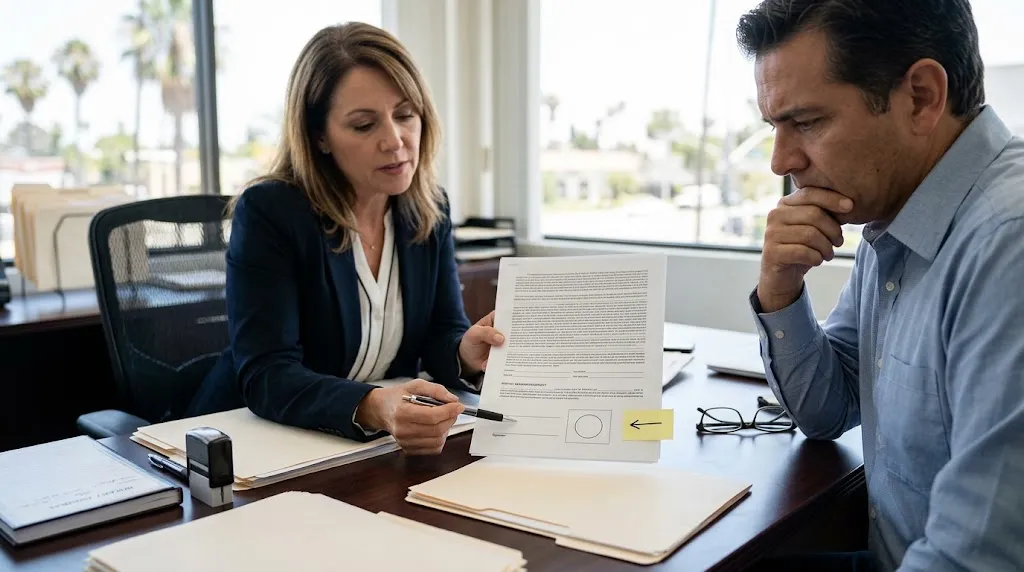
A missing grantor signature. A deed not signed by the grantor conveys nothing, because the grantor’s signature is what effects the transfer. There is no correction for a deed that was never signed; the grantor has to sign a deed, or a court has to act.
A missing or defective acknowledgment. An acknowledgment is the notary’s certification that the signer appeared and proved their identity. California’s all-purpose acknowledgment certificate under Civil Code section 1189 includes a mandatory statement that the notary verifies only the signer’s identity, not the truthfulness or validity of the document. The certificate wording did not change in 2025 or 2026.
A deed without a proper acknowledgment is generally not recordable, and a county recorder will typically reject it. Because recording is what gives constructive notice, an unacknowledged deed may still be effective between the parties while failing to protect the grantee against later purchasers. The fix is usually for the grantor to re-sign before a notary.
Remote notarization. California’s remote online notarization law, SB 696 (2023–2024), does not become operative for most purposes until the Secretary of State completes the necessary technology project or January 1, 2030, whichever comes first. As of September 2026, California notaries cannot perform remote online notarizations. Californians can in many cases use a notary commissioned in another state that permits remote notarization, though whether a particular county recorder will accept a given document is worth confirming first.
Deed fraud and the new notification programs
Recording errors are one problem. Deliberately fraudulent recordings are another, and California has begun addressing them directly.
Under SB 255 (2025–2026), every county must establish a program by January 1, 2027 under which the recorder notifies, by mail at the address used for property tax bills, the person who executed a recorded deed, quitclaim deed, mortgage, or deed of trust, within 30 days of recording. Several counties already run voluntary programs, and owners in those counties can often enroll now. A notice about a deed you did not sign is the signal to act immediately. Confirm the program’s status with your county recorder.
When a correction is the wrong answer
Not every error needs fixing, and not every fix is worth its cost.
A trivial misspelling that leaves no real doubt about identity may never cause a problem, and a title company asked to insure a later sale may simply accept it with an explanatory statement. Recording a corrective deed for a harmless error adds a document to the chain of title without adding certainty.
Conversely, some errors that look minor are not. A legal description off by one lot number can convey the wrong parcel entirely. Vesting recorded as joint tenancy instead of community property with right of survivorship can change the tax basis a surviving spouse inherits. Those are worth fixing promptly, while the grantor can sign.
The useful test is whether the error could cause a title company, a lender, a buyer, or a court to reach a different conclusion about who owns the property or on what terms. If it could, fix it. If it could not, it may not be worth the recording fee.
Bay Legal reviews recorded documents and prepares corrective instruments. Reach us at (650) 668-8000, (213) 668-8000, or through baylegal.com/contact-us.
Frequently Asked Questions
What happens when a recorded California deed contains an error?
It depends on the error. A substantive clerical mistake, such as a misspelled name or wrong legal description, is typically fixed with a corrective deed signed by the original grantor. A narrow set of minor defects can be fixed with a scrivener’s affidavit. Errors the parties disagree about, or that the grantor cannot or will not correct, generally require a court action such as reformation or quiet title.
How is a corrective deed prepared and recorded?
It is a new deed signed and acknowledged by the original grantor, referencing the original recording by document number and date and stating the correction. It is recorded with the county recorder like any other deed. Because it can have property tax or transfer tax consequences if it changes vesting or the property described, confirm the treatment with the county assessor first.
Is an unrecorded deed valid between the parties?
Generally yes. Under Civil Code section 1217, an unrecorded instrument is valid as between the parties and those who have notice of it. What it lacks is protection against a later purchaser or lender who takes for value, in good faith, without notice, and records first, because California follows a race-notice recording rule under Civil Code section 1214.
What are the risks of a missing notarization or signature?
A deed not signed by the grantor conveys nothing and cannot be corrected; the grantor must sign a deed or a court must act. A deed without a proper acknowledgment is generally not recordable, so it may be effective between the parties but will not give constructive notice to later purchasers. The usual fix is for the grantor to re-sign before a notary.
When does a title error require a court action?
When the grantor cannot or will not sign a corrective deed, when the parties disagree about what the deed was meant to say, when there are competing claims to ownership, or when a recorded instrument is void or voidable and needs to be removed from the record. The remedies include reformation under Civil Code section 3399, quiet title, and cancellation of an instrument.