
TL;DR — Key Takeaways
- Discovery is usually the largest controllable cost in a California civil case, and it is front-loaded rather than spread evenly.
- The cost is lawyer time, not filing fees. A deposition costs what it costs because someone prepared for it, took it, and read the transcript.
- A party is limited to 35 specially prepared interrogatories without a supporting declaration, and depositions are generally limited to seven hours of examination, with exceptions.
- In civil actions filed on or after January 1, 2024, any party can demand initial disclosures, which front-loads part of the exchange. That rule is now permanent.
- Discovery disputes, not discovery itself, are what push a budget past its estimate. A single motion to compel can cost more than the discovery it was about.
- Discovery misconduct carries sanctions, and one is mandatory: $1,000 for specified document-production failures.
In a contested California civil case, discovery usually consumes more of the budget than every other stage combined, and more of the calendar as well. It is also the stage the parties control most directly, which is why understanding the cost drivers is worth more than understanding the rules.
The short version: the expense is almost entirely professional time. Court fees for discovery are negligible. What you are paying for is the hours spent drafting, responding, reviewing, preparing, and arguing.
The tools, and where the money goes
Interrogatories. Written questions the other side answers under oath. Form interrogatories are standardized and cheap to serve. Specially prepared interrogatories are drafted for your case, and a party is limited to 35 of them without serving a declaration supporting additional discovery under Code of Civil Procedure section 2030.030. The cost is in drafting them well and in reviewing and objecting to the answers, which takes longer than drafting the questions.
Requests for production. Document demands. Cheap to serve and expensive to respond to, and the asymmetry matters strategically: a broad demand can cost the responding party far more than it costs the requesting party. Document review is frequently the single largest line item in a case with real volume.
Requests for admission. Asking the other side to admit facts, narrowing what has to be proved. Inexpensive relative to their value, and underused.
Depositions. Sworn testimony taken before trial. Generally limited to seven hours of examination of any deponent under section 2025.290, with exceptions including certain complex cases, expert witnesses, and where a court orders otherwise. This is usually the costliest tool: preparation time, the examination itself, the court reporter and transcript, sometimes videography, and the review afterward.
Expert discovery. Designation, reports where required, and expert depositions. Experts bill for their deposition time, and section 2034.430 requires the party taking the deposition to pay the expert’s reasonable and customary hourly fee for that time. That means deposing the other side’s expert costs you their expert’s rate on top of your own lawyer’s.
Initial disclosures. In civil actions filed on or after January 1, 2024, any party may demand initial disclosures under section 2016.090, requiring each appearing represented party to provide specified witness and document information within 60 days. Unlawful detainer, small claims, family, probate and section 36 preference cases are excluded, as are self-represented parties. This rule was set to sunset on January 1, 2027; SB 66, approved July 14, 2025, removed the repeal date and made it permanent. A good deal of commentary still describes it as temporary.
The cutoffs
Discovery does not run until trial. Under Code of Civil Procedure section 2024.020, discovery must generally be completed on or before the 30th day before the initial trial date, and discovery motions must be heard on or before the 15th day before that date. Expert discovery runs on its own later track.
Those dates are measured backward from the trial date set at the case management conference, which is why that hearing determines the shape of the whole case. How long a California civil lawsuit takes covers the sequence.
A continuance of the trial date does not automatically reopen discovery. That catches people.
What drives costs out of control
Rarely the discovery itself. Usually one of these.
Disputes. A motion to compel involves a meet-and-confer process, a separate statement, a motion, an opposition, a reply and a hearing. It can easily cost more than the discovery it concerns. A case with a pattern of them can double its discovery budget.
Scope creep. Requests drafted broadly because narrowing them takes thought. Every additional custodian, year, and category multiplies review time on the responding side and review time on the receiving side.
Electronic discovery. Volume is the enemy. Collection, processing and review of electronic records is where a moderate case becomes an expensive one, and the cost scales with the breadth of the request rather than with the value of what it returns.
Deposition sprawl. Each additional deponent is preparation, examination, transcript and review. A witness list that grows because nobody pruned it is a common and avoidable cost.
Sequencing without a plan. Taking depositions before the documents are in, then re-deposing. Serving written discovery in waves rather than in a considered set. Both produce work that has to be redone.
If you are budgeting a case and want a realistic view of which of these your matter is likely to trigger, that is a conversation worth having early. Call Bay Legal at (650) 668-8000 in Northern California or (213) 668-8000 in Southern California.
Consequences of discovery abuse
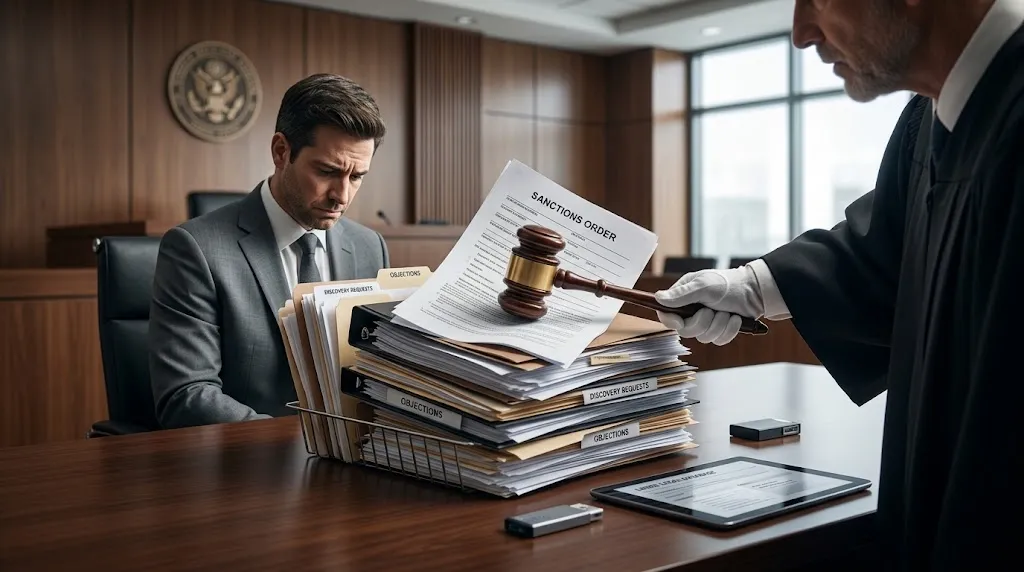
Code of Civil Procedure section 2023.010 lists what constitutes misuse of the discovery process, including persisting in an unwarranted method, using a method to cause unwarranted burden or expense, failing to respond, making evasive responses, making unmeritorious objections, and disobeying a discovery order. Section 2023.030 sets out the sanctions available, escalating from monetary through issue, evidence and terminating sanctions.
One sanction is mandatory. Section 2023.050 requires the court to impose a $1,000 sanction, a figure effective January 1, 2024, payable to the requesting party for specified failures in connection with a demand for inspection or production of documents, in addition to any other sanction, and permits discretionary reporting to the State Bar. It raised the prior amount. The triggering conduct is narrower than the provision’s general reputation, so confirm it applies before relying on it.
Discovery sanctions are granted with some regularity, unlike sanctions for frivolous filings. Dealing with a bad-faith opposing party covers the distinction and what to do about it.
Who pays for discovery
Each side bears its own discovery costs as the case runs. There is no mechanism for billing the other party as you go, and a party with deeper resources can use that asymmetry deliberately by serving demands that cost more to answer than to make.
Three qualifications.
Some discovery costs are recoverable as costs at the end. Code of Civil Procedure section 1033.5 allows the prevailing party to recover certain items, including deposition costs such as taking, video recording and transcribing. Those are costs rather than attorney’s fees, and the prevailing party recovers costs as a matter of right under section 1032. Your lawyer’s time in taking the deposition is not recoverable unless a contract or statute independently makes fees recoverable. Who pays attorney’s fees in California covers that line.
Expert deposition fees shift immediately. Under section 2034.430 the party taking an expert’s deposition pays that expert’s reasonable and customary hourly fee for the time. That is paid when incurred, not at the end.
Sanctions can shift the cost of a dispute. Where a motion to compel succeeds, the court can order the losing party to pay the reasonable expenses including attorney’s fees incurred in making the motion. That is the narrow route by which one side’s discovery conduct ends up on the other side’s invoice.
Keeping discovery proportionate

Decide what you need to prove, then work backward. Discovery taken because it was available rather than because a specific element required it is where budgets go.
Use requests for admission early. Narrowing the disputed facts reduces everything downstream, and they cost less than any other tool.
Negotiate scope before serving. An agreed set of custodians, date ranges and search terms costs an hour and saves a motion.
Prune the deposition list. Ask of each name what testimony you need that you cannot get elsewhere.
Treat a motion to compel as a budget decision. Sometimes the right answer is to proceed without the document. Winning a discovery motion is not the same as advancing the case.
Consider the forum. Limited civil restricts discovery sharply and costs far less as a result. Small claims has none at all. For a documented claim against a solvent defendant, the absence of discovery costs nothing. Choosing between small claims, limited, and unlimited civil covers the tradeoff.
And the honest point: in a meaningful share of cases, thorough discovery costs more than the difference it makes to the outcome. A party who has decided to settle within a predictable range is often better served by proportionate discovery and an early offer to compromise than by a complete record. Is my lawsuit worth it works through that calculation.
Bay Legal plans discovery against a budget rather than against a checklist. Reach us at (650) 668-8000, (213) 668-8000, or through baylegal.com/contact-us.
Frequently Asked Questions
What are the discovery tools in California and what does each cost?
Interrogatories, requests for production, requests for admission, depositions and expert discovery. Court fees are negligible; the cost is professional time. Depositions and document review are usually the largest items, and deposing an opposing expert additionally requires paying that expert’s reasonable and customary hourly fee for the deposition time.
How many interrogatories and depositions are permitted?
A party is limited to 35 specially prepared interrogatories without serving a declaration supporting additional discovery, under Code of Civil Procedure section 2030.030. Form interrogatories are not subject to that count in the same way. Depositions are generally limited to seven hours of examination of any deponent under section 2025.290, subject to exceptions including certain complex cases and expert witnesses.
What drives discovery costs out of control?
Discovery disputes more than discovery itself. A motion to compel can cost more than the material it concerns. Beyond that: overbroad requests, electronic records volume, deposition lists that grow without pruning, and sequencing that produces work having to be redone.
What are the consequences of discovery abuse?
Section 2023.010 defines misuse of the discovery process and section 2023.030 provides sanctions escalating from monetary through issue, evidence and terminating sanctions. Section 2023.050 additionally requires a $1,000 sanction for specified document-production failures, effective January 1, 2024, with discretionary State Bar reporting.
How can a party keep discovery proportionate?
Start from what you must prove and work backward rather than taking discovery because it is available. Use requests for admission early to narrow disputed facts, negotiate scope before serving, prune the deposition list, and treat each discovery motion as a budget decision. Filing in a division with restricted discovery is also a legitimate way to control cost.