

Equal Protection Under Law: How MLK’s Legacy Shaped Modern Real Estate, Immigration, and Construction Rights
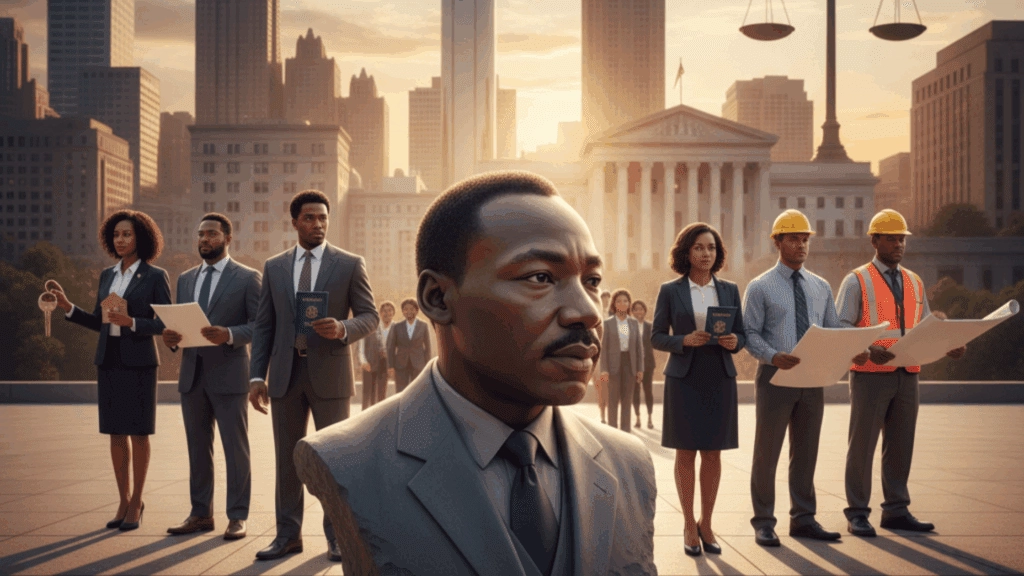
The real estate agent’s lie was simple and efficient. When Black home seekers walked into the office in Chicago’s Gage Park neighborhood during the mid-1960s, the answer came fast: “I’m sorry, we don’t have anything listed.” Then came a subtle shift. When white staff members from Dr. Martin Luther King Jr.’s organization entered those same offices moments later, the books opened. “Oh yes, we have several things. Now what exactly do you want?” This was not happenstance. It was method. It was proof. And it was how Martin Luther King Jr. and the civil rights movement systematized the exposure of a legal crime that no amount of legislation could yet prevent—the deliberate, methodical exclusion of Black Americans from housing based solely on race. Most people know King as the architect of the Civil Rights Movement, the dreamer whose words echoed from the steps of the Lincoln Memorial. Fewer understand that King recognized housing discrimination as something far more sinister than mere social prejudice. It was the financial architecture of racism itself. When Black Americans were systematically barred from building wealth through homeownership, when they were confined to low-income areas with deteriorating housing stock, when entire neighborhoods remained off-limits by law and custom—King understood this wasn’t incidental to racial injustice. It was central to it. The Chicago Campaign That Changed Housing Law From 1965 to 1966, King co-led the Chicago Freedom Movement in one of the most residentially segregated cities in the country. Chicago wasn’t unique in its segregation. It was simply honest about it. Black homeseekers in the city and surrounding suburbs were effectively barred from middle-class, predominantly white neighborhoods. The barriers weren’t theoretical. They were enforced. Real estate agents turned people away. Mortgage lenders rejected applications. White mobs gathered at the borders of neighborhoods to prevent Black families from moving in. King’s strategy in Chicago was precise. His organization coordinated tenant unions. They shared their demands directly with city government leaders. They marched through majority-white neighborhoods, forcing uncomfortable confrontations with segregation in its most visible form. The demand was straightforward: “open housing”—the elementary right for Black Americans to buy homes anywhere they wished. To prove what was happening, King and his allies employed a tactic that would become foundational to civil rights enforcement: testing. The method was straightforward but powerful. Trained testers—pairs of people, one Black and one white, or variations matching different protected characteristics—would conduct the same housing transaction simultaneously. They’d ask the same questions, express the same interest, offer the same qualifications. When discrimination occurred, the difference in treatment became documented, irrefutable evidence. King explained it plainly: “We sent Negroes in large numbers to the real estate offices in Gage Park. Every time Negroes went in, the real estate agent said ‘Oh, I’m sorry we don’t have anything listed.’ And then soon after that we sent some of our fine white staff members into those same real estate offices and the minute those white persons got in, they opened the book.” From Chicago to Federal Law The campaign created friction, anger, and ultimately, results. By August 1966, after approximately a year of relentless organizing despite facing violence from white Chicagoans, the Chicago Freedom Movement achieved concrete victories. The Chicago Housing Authority agreed to build public housing in white middle-class areas. The Mortgage Bankers Association promised to stop discriminatory lending policies. But these local victories, significant as they were, became footnotes to what followed. Two years later, one week after King was assassinated in Memphis, Tennessee, Congress passed the Fair Housing Act. The timing was not coincidental. It was, in some measure, a response to King’s work and his death—an acknowledgment, however incomplete, that housing segregation had become untenable as national policy. The Fair Housing Act made discrimination in housing based on race, color, religion, or national origin illegal. It established procedures for enforcement. It created legal remedies for victims. On paper, it ended an era. In practice, it began another one—the ongoing struggle to actually enforce the law. Today, more than 50 years after King’s assassination and the passage of the Fair Housing Act, housing discrimination persists. It has evolved. It has become more subtle, harder to prove, easier to rationalize. But it has not disappeared. Civil rights organizations like the Equal Rights Center continue to use the testing methods King pioneered to document discrimination. They have uncovered source-of-income discrimination against housing voucher holders. They have found race discrimination against individuals with criminal records. They have exposed housing discrimination against people with disabilities. A Broader Legacy King’s contributions to housing law represent only one dimension of his impact on modern civil rights. His philosophy extended to immigration, labor, and economic justice in ways that remain strikingly relevant today. “Injustice anywhere is a threat to justice everywhere,” King wrote in his 1963 Letter from Birmingham Jail. Those words were not abstractions. They articulated a principle: that discrimination against any group threatened justice for all. Today’s immigrant communities experience this reality acutely. Immigrants arrive seeking work and economic opportunity, yet encounter prejudice, exploitation, and a legal system of breathtaking complexity. Many face unsafe working conditions. Wage theft is common. Housing discrimination follows them. They navigate an immigration system designed, in many respects, to create permanent precarity. King advocated forcefully for economic justice, highlighting labor issues and poverty. Construction workers—both citizens and immigrants—face wage theft, unsafe conditions, and retaliation. In many ways, these struggles echo King’s core argument: that true civil rights must include economic dignity. You cannot have freedom while facing exploitation. You cannot have equality while living in fear of homelessness. You cannot have justice while the legal system treats different categories of people as fundamentally unequal. The Unfinished Work Real estate attorneys today rely on Fair Housing Act protections that King’s movement made possible. Immigration attorneys invoke equal protection principles developed through civil rights litigation. Construction law protections for workers emerged from the broader civil rights framework King helped establish. Yet the fundamental promise remains unfulfilled. Housing segregation continues through different mechanisms—predatory lending, zoning laws that
Standing Together: How Martin Luther King’s Legal Team Changed America—And Why You Need Lawyers Like Ours Today
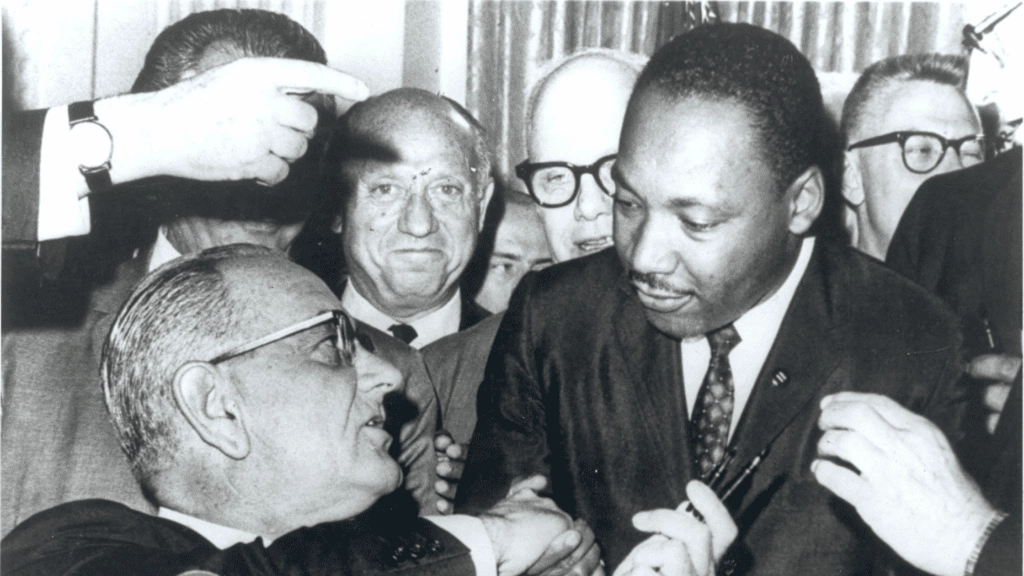
When Dr. Martin Luther King Jr. walked into a courtroom, he never walked alone. Behind every speech, every march, and every act of civil disobedience stood a network of skilled attorneys—men and women who understood that transforming America required both moral courage and legal strategy. Their work fundamentally altered the legal landscape of the United States, creating the civil rights protections that Americans rely on today. Understanding this partnership reveals something vital: meaningful change requires the right lawyers standing beside you. The Lawyers Who Made History King’s legal team was not a small operation. Over seventy lawyers and several major legal organizations worked to defend King, his colleagues, and thousands of protesters throughout the civil rights movement. These weren’t distant advocates operating behind the scenes. They were strategic partners who understood that law and direct action could work in concert. Clarence B. Jones was King’s most intimate legal advisor. Jones joined King’s defense team in 1960, helping him win a tax fraud trial brought by the State of Alabama—a case designed to destroy King’s credibility. After King’s acquittal, Jones relocated to Harlem to serve as general counsel for the Gandhi Society for Human Rights, the SCLC’s fundraising arm. But his role extended far beyond traditional legal representation. Jones was part of King’s inner circle, serving as speechwriter, strategist, and confidant. He helped draft portions of King’s most famous speeches, including the “I Have a Dream” address in 1963 and the “Beyond Vietnam” speech in 1967. Vanity Fair called him “the man who kept King’s secrets”—someone privy to King’s decision-making processes and political struggles. Harry H. Wachtel, a prominent Manhattan corporate lawyer, became King’s legal counsel and confidant beginning in 1962. Like Jones, Wachtel’s role transcended traditional lawyering. He served as vice president and legal counsel for the Martin Luther King Jr. Center for Nonviolent Social Change and was a trustee of the Southern Christian Leadership Conference. Wachtel helped establish the Gandhi Society for Human Rights and worked on some of the movement’s most significant legal cases, including cases involving voting rights in Selma, Alabama, and the landmark libel case New York Times v. Sullivan. He remained involved in King’s legacy long after the civil rights leader’s death, serving the King Center until 1982. The NAACP Legal Defense and Educational Fund (LDF), founded by Thurgood Marshall, was the institutional backbone of civil rights litigation. The LDF provided legal representation to hundreds of protesters, mounting constitutional challenges to segregation laws while defending activists against criminal prosecutions designed to intimidate the movement. How Lawyers and Activists Worked Together What made King’s relationship with lawyers unique was that he controlled when and how to use litigation—he didn’t surrender strategy to lawyers. This was revolutionary. Unlike earlier civil rights efforts that relied solely on courts to dismantle segregation, King integrated legal strategy with direct action. When he was arrested for marching without permits or violating segregation ordinances, his lawyers would mount constitutional challenges. But King’s nonviolent protests created the political pressure that transformed legal arguments from abstract constitutional theory into urgent national imperatives. Consider the Birmingham campaign of 1963. King deliberately violated segregation laws and permit requirements, knowing he would be arrested. His lawyers were prepared to challenge his conviction in court, but more importantly, King’s imprisonment—and the iconic image of him in a jail cell—galvanized national attention. From that cell, King wrote his “Letter from Birmingham Jail,” articulating the philosophical and legal justification for civil disobedience. His lawyers transformed that letter into a legal document arguing that citizens had the constitutional right to violate unjust laws. The New York Times v. Sullivan case illustrated this partnership perfectly. When the New York Times published an advertisement critical of Montgomery officials, L.B. Sullivan sued for libel, winning a $500,000 judgment against the newspaper and King’s ally Ralph Abernathy. Wachtel and other civil rights lawyers appealed to the Supreme Court, where they argued that the First Amendment protected criticism of government officials. The Court agreed, establishing a landmark precedent protecting free speech and free press—protections that remain foundational to American democracy. These weren’t isolated legal victories. They were strategic moves in a larger campaign to transform American law itself. The Legal Framework King’s Lawyers Built The civil rights lawyers working with King didn’t simply defend individual protesters. They systematically challenged the legal architecture of segregation and discrimination. Their work created the constitutional framework that governs modern law practice across multiple practice areas—including immigration, real estate, estate planning, and construction law. Real Estate and Fair Housing: Before King’s movement, American real estate law explicitly permitted racial discrimination through restrictive covenants written into property deeds. Civil rights lawyers challenged these provisions, arguing they violated the Constitution’s guarantee of equal protection. The Fair Housing Act of 1968, passed days after King’s assassination, prohibited racial discrimination in housing. Today’s real estate attorneys rely on this statute daily when representing clients facing housing discrimination. When a client can’t secure financing, or is steered away from certain neighborhoods, or faces discrimination from landlords, the legal remedies available exist because King’s lawyers forced America to confront housing discrimination as a constitutional violation. Voting Rights: King’s lawyers worked extensively on voting rights cases, particularly in Selma, Alabama, where the SCLC planned a major voting rights campaign in 1965. These lawyers mounted constitutional challenges to literacy tests, poll taxes, and grandfather clauses—techniques used to prevent Black Americans from voting. Their work led to the Voting Rights Act of 1965, which suspended literacy tests and authorized federal oversight of voting in jurisdictions with histories of discrimination. Modern attorneys representing clients facing voting rights violations or challenging discriminatory electoral practices rely on the legal framework these civil rights lawyers established. Employment and Economic Rights: King’s lawyers also developed legal theories protecting workers from discrimination. His assassination occurred in Memphis, where he was supporting striking sanitation workers—a cause rooted in economic justice. The legal protections for workers that modern employment attorneys use today were strengthened by cases brought by civil rights lawyers arguing that economic dignity was inseparable