

What Happens When Someone Dies Without a Will in California?

TL;DR When a Californian passes away without a valid will or trust, they die intestate. This means the intestate definition under California law takes over, triggering a legal process where the state determines who inherits your property rather than your personal wishes. This process is known as intestate succession. Without proactive planning, your estate enters a slow and expensive probate court process. What Happens When Someone Dies Without a Will in California? (Intestate Succession Explained) When a California resident passes away without a valid will or trust, they die intestate. The intestate definition essentially covers any situation where no legal document exists to name beneficiaries or executors. While many believe their family naturally knows what to do, the California probate court must follow a strict legal hierarchy. This legal process of settling an estate without a will is known as intestate succession. Understanding the Intestate Definition and California Probate Under the California Probate Code, the court appoints an administrator to oversee the distribution of your property. This individual follows a process similar to an executor, gathering assets, valuing property, and settling outstanding debts and taxes. This often leads to probate delays, which can be both costly and emotionally draining for grieving families. Instead of a smooth transfer of wealth, family members must navigate complex filings and court hearings that typically take 9 to 18 months. Navigating the complexities of California probate and intestate succession can be challenging for any family. Our goal is to help clients understand their rights and work to preserve their generational wealth. If you need guidance on managing a loved one’s estate or want to discuss your legal options, call Bay Legal, PC at (650) 668-8000. You may also schedule an appointment via our booking calendar or email our team at intake@baylegal.com to learn how we can help protect your legacy. Who Inherits Your Assets Under Intestate Succession? California law creates a specific order for who receives property when someone dies intestate. A solid estate plan helps your family avoid these hurdles. At Bay Legal, PC, our attorneys work to guide families through these difficult times. Community Property: Generally, a surviving spouse inherits all community property, which includes assets acquired by either partner during the marriage. Separate Property: Assets owned before marriage are split based on family structure. One Child: The spouse and child each inherit 50% of the separate property. Multiple Children: The spouse receives 33.3%, while the children divide the remaining 66.7%. No Children: The spouse receives 50%, and the remaining 50% goes to the deceased’s parents or siblings. No Spouse: If there is no spouse, the law distributes the entire estate to children, parents, or siblings in that order. Without a clear plan, your family legacy might end up in the hands of a relative you have not spoken to in decades. Strategic legal planning is essential to avoid the common pitfalls of dying intestate. We strive to provide clear guidance every step of the way, advising on legal aspects while collaborating with your tax or financial advisors for specialized needs. To begin securing your family’s future, please call (650) 668-8000, reach out to intake@baylegal.com, or use our booking calendar to find a time that works for you. Let’s discuss your legal options and how to navigate the recent 2025 law changes together. How to Protect Your Legacy Preservation The best way to prevent the state from controlling your assets is to create a comprehensive estate plan. This typically includes a will, a living trust, and clear beneficiary designations. By taking these steps, you work to ensure that your assets transfer smoothly to the next generation without unnecessary interference. As of 2025, major changes to federal estate tax exemptions may affect your succession plan. Specifically, the federal exemption is set to increase to $15,000,000 in 2026, though proactive planning in 2025 remains essential for California families. Furthermore, new laws effective April 2025 allow for a simplified transfer of primary residences valued up to $750,000, potentially bypassing full probate. Dealing with the loss of a family member is difficult enough without the added stress of intestate legal hurdles. Bay Legal, PC acts as a dedicated legal partner to help you protect what matters most. Whether you are facing a property dispute or need assistance with estate administration, we are here to help. Contact us for a consultation by calling (650) 668-8000, emailing intake@baylegal.com, or selecting a slot on our booking calendar. Wait until you see what happens to a California home when the title is not properly protected in a trust. Frequently Asked Questions 1. What is the legal intestate definition in California? Dying intestate refers to passing away without leaving a valid last will and testament to direct the distribution of your assets. 2. How does the California intestate definition affect my family? It means the state uses a “default playlist” to distribute your property based on a rigid legal hierarchy rather than your actual relationships or intentions. 3. Who inherits my house if I die intestate in California? Distribution depends on marital status; a surviving spouse typically receives all community property, but separate property is split between the spouse and children. 4. Can my partner inherit if we aren’t married and I die intestate? No, California’s intestate laws do not recognize unmarried partners, friends, or charities as legal heirs. 5. What is the order of heirs under intestate succession? The hierarchy starts with a spouse and children, followed by parents, then siblings, and eventually more distant relatives like grandparents or cousins. 6. Does being intestate always require a probate court process? Yes, unless you have non-probate assets like a living trust or accounts with designated beneficiaries, the estate must generally go through formal probate. 7. How can I avoid becoming intestate? The most effective way is to create a revocable living trust or a will that clearly outlines your beneficiaries and executors. 8. What happens to my estate if no relatives are found after I die intestate? If no eligible heirs
Trust vs Will: The 2026 California Choice Exposing Family Business, Home, Privacy

TL;DR Confused by trust vs will in California? This 2026 guide breaks down will vs trust basics, key differences, and probate risks. Wills often trigger public court probate, while funded trusts offer privacy and faster transfers. Learn the difference between a will and a trust, 2025 threshold changes ($208,850 personal property, $750,000 home), costs, and a decision tree. Avoid common pitfalls like unfunded trusts. Bay Legal PC advises on trust vs will options to help match your estate size and goals. Compare now to protect your family from delays and fees. Trust vs Will in California: Your 2026 Guide to the Difference Between a Will and a Trust In California, the trust vs will decision is not just paperwork. It can shape how fast your family gets access to money, how much ends up in court, and how public your details become. Many people search will vs trust when a parent gets older, a home value jumps, or a new baby arrives. Others wait until a health scare, then rush to sign something without understanding the difference between a will and a trust. Ready to compare trust vs will for your California plan and see what actually fits your home, accounts and family goals? Bay Legal PC can advise on estate planning options, explain the difference between a will and a trust, and help you coordinate next steps with your tax or financial advisers when specialized input is needed. Call Bay Legal PC at (650) 668 800, schedule an appointment through our booking calendar, or email intake@baylegal.com. Visit us at 667 Lytton Ave Suite 3, Palo Alto, CA 94301, United States. Attorney Advertising. The difference between a will and a trust (plain English) A will tells the court who should receive your assets after you die and who should manage that process. In many cases, it still sends your estate into probate, which is a formal court process. A revocable living trust is a legal arrangement that can hold title to assets, so a successor trustee can manage and distribute them under the trust’s terms. The trust only works as intended when you fund it, meaning you actually move assets into the trust’s name. That is the core difference between a will and a trust: a will often relies on the court to transfer property, while a funded trust is designed to transfer property without the same probate pathway. This is why trust vs will is not a theoretical debate for most California homeowners. Probate, privacy, and what changes in 2025-2026 Probate can become public-facing because filings with the court become part of the record. When a will gets filed in probate, people can typically access details about the estate through court records. By contrast, a living trust document generally does not get filed with the court as part of the ordinary transfer process. As a result, many families use trusts because they want more privacy around who receives what. California also expanded certain “summary succession” options that can avoid full probate in specific cases. The California Courts self-help site explains that Assembly Bill 2016 raised the maximum value for certain real property petitions to $750,000, but only for the decedent’s main home in California. The same court resource notes that these value limits are updated every three years, with the last update on April 1, 2025, and the next on April 1, 2028. That timing matters if you are planning around a home, not just bank accounts. Separately, AB 2016 also increased the small estate affidavit threshold for personal property to $208,850 starting April 1, 2025, adjusted for inflation. That means some estates can transfer certain personal property without formal probate, but the details still depend on what you own and how it is titled. Will vs trust costs: What people actually pay for People often assume a will is “cheap” and a trust is “expensive,” but the real cost is usually the total cost over time. Drafting a will may cost less upfront, but probate costs, delays, and stress can rise later if probate becomes necessary. A trust can cost more upfront because it usually involves more documents and, importantly, funding work. Still, many Californians pursue trust planning to reduce probate friction, especially when a home is involved. If you keep circling the will vs trust question, it may be time for a clear plan review that matches how your assets are titled today. Bay Legal PC strives to help clients understand trust vs will tradeoffs, including probate exposure, privacy concerns and practical funding steps, while collaborating with outside professionals as appropriate. To get started, call (650) 668 800, book a time using our booking calendar, or email intake@baylegal.com. Bay Legal PC is located at 667 Lytton Ave Suite 3, Palo Alto, CA 94301, United States. Attorney Advertising. Decision tree: Trust vs will in California (2026) Use this quick decision tree as a starting point, not a final answer. California rules and your asset titles can change the outcome. Do you own a California home (or real estate in any state)? Yes: Lean toward a funded living trust so your heirs can often avoid full probate for that property; ask Bay Legal PC about trust funding steps. No: Go to Step 2. Do you care strongly about privacy for who gets what? Yes: A trust is often preferred because it typically stays out of court filings; confirm your plan covers beneficiary designations too. No: Go to Step 3. Is your estate likely to qualify for a simplified California process? Possibly: Check whether your situation fits California “summary succession” rules and the updated home petition limit of $750,000 for a main residence; you still must meet the legal requirements. Not sure: Go to Step 4. Do you want incapacity planning built into management of assets? Yes: A trust can allow a successor trustee to step in if you become unable to manage finances, but only for assets actually held in the trust. No: A will may still be useful, but
The Role of a ‘Trust Protector’: An Extra Layer of Oversight for Your California Trust

Discover the trust protector, a key role for adding flexibility to your estate plan, modifying trusts, and removing a problematic trustee.
What Is a Certificate of Trust and Why Do I Need One in California?

Discover why a certificate of trust in California is the key to funding a trust while keeping your family’s inheritance private.
How to Use the Annual Gift Tax Exclusion to Reduce Your Estate in California
Learn how the annual gift tax exclusion 2025 can help you make tax-free gifts to family and slash your taxable estate.
Do Wills Avoid Probate in California? Here’s What You Need to Know
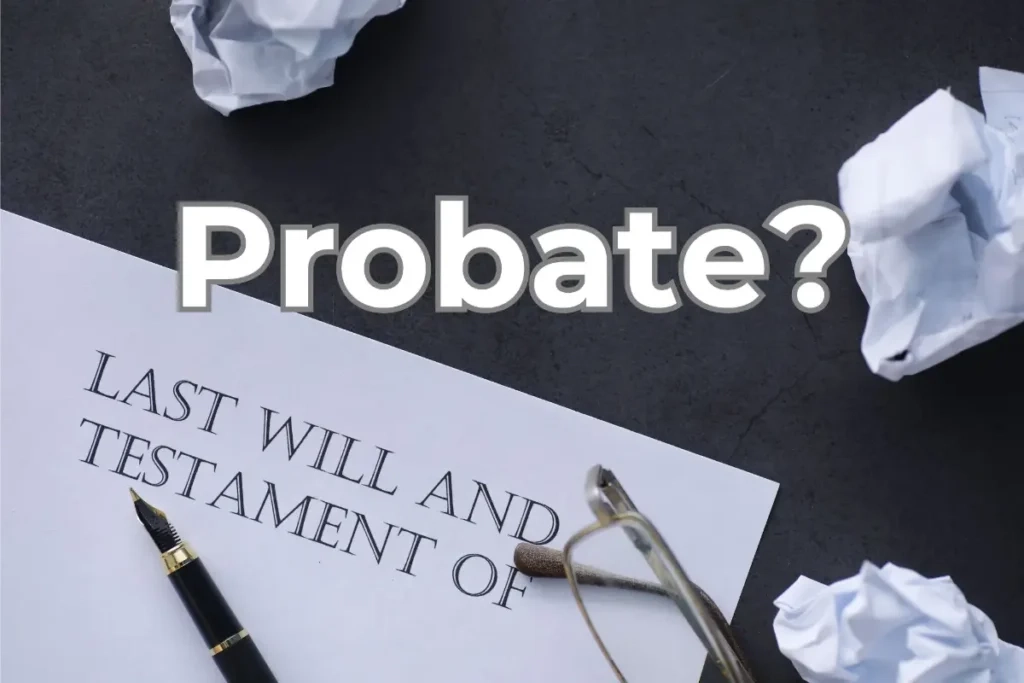
Many California residents assume that creating a will prevents their estate from going through probate. This common misconception often leads to unexpected complications for families after a loved one passes away. The truth about wills and probate in California is more complex and may differ from what most people believe. Do Wills Automatically Avoid Probate in California? A will does not help you avoid probate in California. In fact, having a will ensures that your estate will go through the probate process. The probate court is responsible for validating your will and overseeing the distribution of assets to your beneficiaries according to your instructions. The main purposes of a will are to: While these functions are crucial for estate planning, they do not eliminate the need for probate. The court must still verify the will’s authenticity and oversee the asset distribution to ensure everything is carried out as intended. Can the Executor of an Estate Change the Will? No, the executor does not have the authority to change the terms of a will. The executor’s main responsibility is to carry out your instructions as written, acting in the best interests of the estate and your chosen beneficiaries. If changes are needed after your passing, such as adjusting inheritances or addressing unexpected circumstances, all affected beneficiaries must generally agree to the change, and in some rare situations, legal documents like a “deed of variation” (often used in the UK) may be necessary. In California, the will stands as your final word—executors must follow its directions, not rewrite them. This ensures your wishes are honored and maintains fairness in estate distribution. How Can You Avoid Probate in California? Since wills alone cannot bypass probate, many California residents look for alternative ways to transfer assets directly to their loved ones. Several legal tools can help you avoid the probate process entirely and ensure a smoother transition. Living Trusts A revocable living trust is one of the most effective ways to avoid probate in California. By transferring ownership of your assets to a living trust, you maintain control during your lifetime and ensure that your successor trustee can distribute the assets without court involvement after your death. Benefits of a living trust include: Joint Ownership with Right of Survivorship When property is held in joint ownership with right of survivorship, it passes directly to the surviving owner upon one owner’s death. Commonly used assets include: This method avoids probate for jointly held assets but may not work for all types of property. Transfer on Death (TOD) Designations Certain assets allow you to name beneficiaries through Transfer on Death (TOD) designations. These include: These tools ensure your assets transfer directly to your designated beneficiaries upon your death, bypassing the probate process entirely. Executor’s Duty to Keep Heirs Informed One key responsibility of an executor in California is to keep heirs and beneficiaries informed throughout the probate process. Shortly after probate begins, the executor must provide formal notice to all heirs and beneficiaries named in the will. This ensures everyone is aware of their potential interest in the estate. Beyond this initial notification, the executor is obligated to keep beneficiaries reasonably updated as the process unfolds. This typically includes: Notifying heirs about important court filings and hearings Sharing information about the assets and debts of the estate Providing updates if there are delays or unexpected developments Transparency is essential. Beneficiaries have a right to know about significant estate matters and may request additional information or documentation. The executor’s communication and disclosure help promote trust and accountability among everyone involved. What Happens During the Probate Process in California? When an estate goes through probate with a will, the court supervises the process to ensure all legal requirements are met. The executor named in your will is responsible for managing the process, which typically involves: The probate process can be time-consuming and costly, often taking 9-18 months or longer for complex estates. Executors must also obtain court approval for significant actions and provide detailed accountings of all estate activities. What Happens If You Don’t Go Through Probate When Required? If probate is required for an estate in California and you skip the process, there are significant consequences. The decedent’s assets remain locked—meaning no one, not even the designated heirs or beneficiaries, can legally access, transfer, or sell those assets. Financial institutions, title companies, and government agencies generally will not release funds or transfer property titles without a court order from the probate process. As a result, bank accounts stay frozen, real estate cannot be sold or refinanced, and other personal property remains in limbo until probate is completed. In short, failing to initiate probate when required can cause long delays, frustrate beneficiaries, and prevent the lawful distribution of the estate. It’s essential to follow the proper legal steps to ensure everything can be settled efficiently and according to the decedent’s wishes. Costs Associated with Probate in California Probate in California can be expensive, with costs that may consume a significant portion of the estate. Statutory fees for attorneys and executors are based on the gross value of the estate and follow this schedule: For example, an estate worth $500,000 could result in $13,000 in statutory fees for both the attorney and executor, totaling $26,000. Additional costs may include: Are There Any Exceptions to the Probate Process in California? California offers a simplified procedure for smaller estates valued under $166,250. Eligible estates can use an affidavit procedure to bypass full probate, saving time and money. Can All Assets Avoid Probate in California? While many assets can bypass probate with proper planning, not all are exempt. Assets commonly excluded from probate include: Proper titling and beneficiary designations are key to ensuring assets avoid probate. For instance: Why Estate Planning Matters Beyond Avoiding Probate Avoiding probate is just one component of a comprehensive estate plan. A well-designed plan can also: Regularly reviewing and updating your estate plan ensures it remains aligned with your goals and current laws. Life changes such
Estate Planning for High Net Worth Individuals in California

High net worth individuals in California face distinct challenges when planning their estates. With the state’s complex tax laws, high property values, and unique regulations, crafting an effective estate plan is essential to protect your assets and secure your legacy. This guide provides proven strategies and insights to help affluent Californians navigate the intricacies of estate planning. Leveraging Legal Structures for Asset Protection Establishing the right legal structures is a foundational step in shielding your assets from personal liability exposure, creditor claims, or unforeseen lawsuits. Among the most common options, Limited Liability Companies (LLCs) offer significant advantages for both real estate investors and business owners. Key Benefits of LLCs in Asset Protection: Personal Liability Shield: By holding property or business interests within an LLC, your personal assets are generally insulated from claims arising against the company. If the LLC is sued, your own finances—such as your home or savings—are typically protected. Flexible Ownership and Succession: LLCs allow you to add or remove members and change management structure, which is ideal for family estates or multi-generational planning. They also simplify the transfer of interests, avoiding probate complications. Separation of Assets: Using separate LLCs for different properties or business ventures can compartmentalize risk. For example, if one property faces legal action, it does not automatically jeopardize your other holdings. Creditor Protection: Some states provide “charging order” protection, preventing creditors from seizing LLC assets directly and instead limiting them to distributions, which offers further insulation. For high-value or complex estates, thoughtful use of LLCs—sometimes in combination with trusts or limited partnerships—enhances asset protection and streamlines management. Collaborating with estate planning professionals and tax advisors ensures your legal structures comply with California regulations and maximize protective benefits. Understanding the Unique Challenges for High Net Worth Californians California’s high property values and progressive tax system create specific obstacles for high net worth individuals. These challenges include: Recognizing these challenges is the first step toward creating a plan tailored to your unique circumstances. Common Concerns and Misconceptions About Estate Planning for High Net Worth Individuals Estate planning for those with significant assets often comes with a unique set of questions and myths. Let’s debunk a few of the most frequent concerns: “I won’t owe estate taxes.”Many assume their estate won’t surpass the federal exemption limit—especially with seemingly high thresholds. But in California, soaring real estate prices alone can push even conservative portfolios over those limits, triggering significant estate tax exposure at the federal level. “A basic will is enough.”A simple will might suffice for smaller estates, but high net worth individuals in California face complex challenges—like minimizing taxes, managing valuable properties, and protecting privacy. Relying solely on a will could mean excessive probate costs, lost tax-saving opportunities, or unintended asset distributions. “Trusts are only for the ultra-wealthy.”This is a common misconception. In reality, trusts are practical tools for anyone wishing to bypass the lengthy probate process, maintain family privacy, and efficiently pass on wealth. For high-value estates, vehicles like irrevocable trusts, charitable remainder trusts, and grantor retained annuity trusts (GRATs) are especially effective. “Asset protection isn’t a concern.”Some believe lawsuits, creditors, or family discord are remote possibilities. However, high-profile or high net worth families are frequent targets. Proactively establishing legal protections—such as family limited partnerships (FLPs) or qualified personal residence trusts (QPRTs)—can shield assets and preserve wealth for future generations. “Estate planning is a one-time task.”A set-it-and-forget-it approach is risky. Changes in tax laws, real estate values, or family status demand periodic reviews to ensure your plan still meets your goals. These misconceptions can lead to costly oversights or missed opportunities. Clarity and proactive planning are crucial for safeguarding your estate and legacy. Strategies to Minimize Estate Taxes Estate taxes can erode the wealth you intend to pass to your heirs. In 2024, the federal estate tax exemption stands at $13.61 million per individual. However, for estates exceeding this threshold, the excess amount is taxed at 40%. Maximizing the Lifetime Estate Tax Exemption The lifetime estate tax exemption is one of the most powerful tools available to high net worth individuals looking to minimize federal estate taxes. This exemption permits you to transfer up to $13.61 million (as of 2024) tax-free, either during your lifetime or at death. Careful planning is essential to make the most of this opportunity. To use this exemption effectively, timing is everything. If your assets—real estate, stock portfolios, or closely held businesses—are expected to appreciate substantially, consider transferring them now, while exemption limits are high. By gifting assets today, you can lock in their current value under the exemption, sheltering future appreciation from estate taxes. It’s a proactive approach that can potentially save your heirs millions and preserve your legacy across generations. Tools Used by the Ultra-Wealthy to Minimize Estate Taxes High net worth families frequently turn to advanced estate planning tools to reduce potential tax liabilities and safeguard multigenerational wealth. Among the most effective strategies are: Sophisticated Trust Structures: Vehicles such as intentionally defective grantor trusts (IDGTs), irrevocable life insurance trusts (ILITs), and dynasty trusts are used to move appreciating assets out of your taxable estate. These trusts can offer flexibility, asset protection, and significant tax advantages while retaining certain controls during your lifetime. Asset Protection Techniques: Structuring ownership through family limited partnerships (FLPs), limited liability companies (LLCs), or, in some cases, offshore trusts can shield assets from excessive taxation and creditors. These vehicles not only provide tax benefits but also help preserve privacy and streamline the transfer of business interests or real estate. Lifetime Gifting Programs: Proactively transferring assets to heirs during your lifetime—using the annual gift tax exclusion or leveraging your lifetime exemption—can significantly reduce the size of your taxable estate. Strategic gifting may also allow assets to appreciate outside of your estate, minimizing future estate taxes. By incorporating these advanced methods, affluent individuals can build robust estate plans designed to maximize family wealth and minimize erosion from taxes. Here are key strategies to minimize these taxes: Annual Gifting Program Leveraging annual gift exclusions can significantly reduce