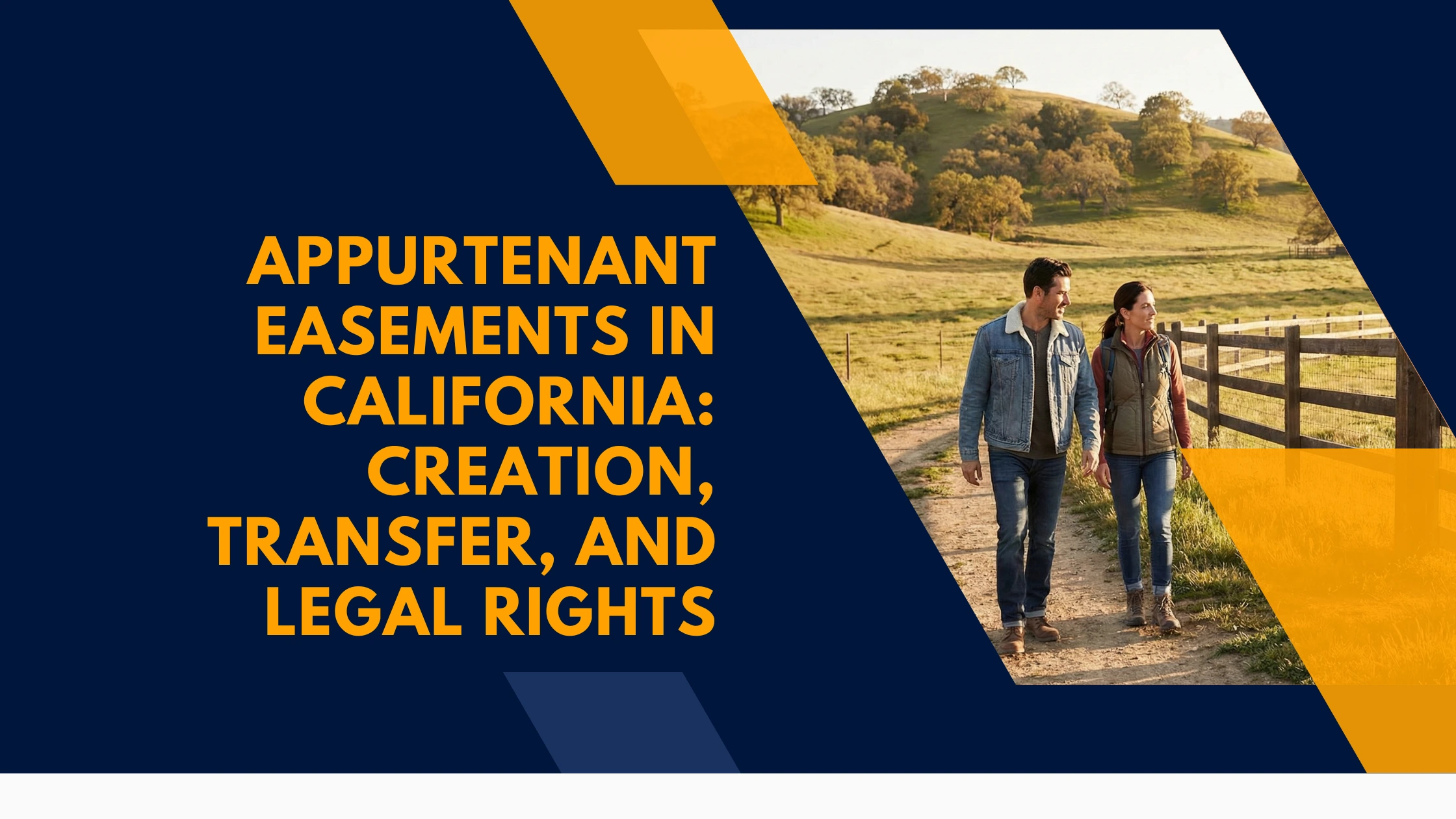
Navigating California real estate law requires understanding property rights. An appurtenant easement legally allows one landowner to use an adjacent property for a specific purpose. This creates a dominant estate that benefits from the access and a servient estate that provides it. Because an easement appurtenant permanently attaches to the land, it automatically transfers when owners sell the property. This guide explains how to create, modify, or terminate these agreements. Whether dealing with a shared driveway or utility access, property owners must understand these permanent legal burdens. Ignoring these property rules could drastically impact your real estate investment value today.
Everything You Need To Know About An Appurtenant Easement In California
Property ownership in California involves complex legal frameworks. Many buyers purchase land without fully understanding their boundary rights. Sometimes, neighboring properties share necessary access routes. This situation often requires a formal legal agreement. An appurtenant easement serves as the primary tool to resolve these land access issues.
Consequently, understanding these property rules remains crucial for every real estate investor. This guide breaks down the critical components of property access rights. You will learn how these agreements function in the real world. Furthermore, you will discover how they impact property values.
The Fundamentals Of An Appurtenant Easement In California
An appurtenant easement represents a specific type of property right. It grants one landowner the legal authority to use a portion of an adjoining parcel. This usage must serve a specific and defined purpose. For example, a homeowner might need to cross a neighbor’s yard to reach a public road. Therefore, they establish a legal path across the neighboring property.
California courts presume an agreement is an appurtenant easement if the contract lacks specific classifications. Judges favor this interpretation because it provides stability. It directly benefits the land itself rather than a specific individual. Moreover, this legal structure ensures continuity in land use arrangements. The law binds the two properties together permanently.
Identifying The Dominant And Servient Estates
Every easement appurtenant involves two distinct property roles. Legal professionals classify these as the dominant estate and the servient estate. The dominant estate represents the property that receives the benefit. The owner of the dominant estate holds the right to use the adjacent land.
Conversely, the servient estate represents the burdened property. The servient owner must allow the neighboring owner to access their land. Furthermore, the servient owner cannot block or obstruct the designated area. The relationship between these two estates forms the foundation of the agreement. Ultimately, one property gains an advantage while the other accepts a limitation.
If you want a lawyer to review a deed, title report, or map for an easement appurtenant issue, consider scheduling an appointment via our booking calendar so you can walk through the documents in an organized way.
How An Easement Appurtenant Works In Practice
Real estate developers frequently use an easement appurtenant to solve logistical problems. Shared driveways serve as the most common example. If a parcel sits completely landlocked, the owner needs a way to reach the street. Therefore, they secure a right of way across the parcel that borders the public road.
Additionally, utility companies rely on these structures to install necessary infrastructure. Property owners might grant access for water pipes or electrical lines. The dominant owner gains essential services. Meanwhile, the servient owner loses the ability to build structures over the utility lines. Consequently, these agreements dictate how owners can develop their land.
Automatic Transfer When Selling The Property
One vital characteristic defines an appurtenant easement. It runs with the land permanently. This legal phrase means the agreement attaches directly to the property deed. It does not belong to the individual person who signed the original contract. Therefore, the rights and burdens survive any change in ownership.
When a dominant owner sells their home, the new buyer automatically inherits the access rights. Similarly, when a servient owner sells their property, the buyer must honor the existing access routes. Buyers must conduct thorough title searches before finalizing a purchase. Otherwise, they might unknowingly acquire a burdened property. Furthermore, title insurance helps protect buyers from undiscovered property claims.
Duration And Lifespan Of These Legal Rights
Most property owners assume an easement appurtenant lasts forever. In most situations, this assumption proves correct. The law designs these agreements to provide permanent solutions for landlocked parcels. The initial written contract establishes the specific timeframe.
However, some agreements include specific expiration dates. Two neighbors might agree to a temporary access route during a construction project. Once the construction ends, the access right terminates automatically. Therefore, property owners must read the original deed carefully. The exact language determines the true lifespan of the agreement.
If you’re dealing with a driveway, access road, or utility issue tied to an appurtenant easement, consider calling Bay Legal PC at (650) 668 8000 to discuss practical next steps for your property.
Legal Procedures For Modification Or Termination
Circumstances change over time. Consequently, landowners often want to alter an existing appurtenant easement. Property owners can terminate these agreements through several legal methods. First, the two parties can draft a formal written release. The dominant owner voluntarily gives up their access rights. They must record this new document with the county clerk.
Second, the law allows termination through a process called merger of title. An easement appurtenant extinguishes immediately if one person buys both properties. The legal need for a separate access right disappears when someone owns the entire landmass. Therefore, the properties merge into a single unburdened estate.
Finally, a dominant owner can abandon the right. However, simple non-use does not legally constitute abandonment in California. The dominant owner must perform definitive actions showing a clear intent to abandon. For instance, they might build a brick wall blocking their own access path. Courts require substantial proof before terminating recorded privileges.
The Hidden Dangers Of Informal Agreements
Many neighbors rely on friendly handshake deals for property access. They skip the formal legal paperwork to save time. This decision almost always leads to disaster. An informal agreement does not create a valid appurtenant easement. Consequently, the access right disappears the moment one neighbor sells their house.
To protect your real estate investment, you must execute a formal written deed. You must record this deed with the local government. This public record provides legal notice to all future buyers. Furthermore, it prevents subsequent owners from denying the existence of the access route.
Clear documentation helps avoid expensive litigation. Disputes frequently arise regarding the extent of permitted use. A vague contract might allow vehicle access but fail to specify vehicle size. Suddenly, a neighbor drives heavy commercial trucks across a quiet residential driveway. Therefore, precision in legal drafting remains absolutely essential. You might think your property boundaries are secure today, but a hidden document from decades ago could completely upend your ownership rights tomorrow.
If you prefer to share paperwork first, consider emailing to intake@baylegal.com with the relevant documents and a short description of the appurtenant easement question you are trying to solve.
Frequently Asked Questions
1. What is an appurtenant easement?
An appurtenant easement is a property right that lets one parcel use part of a neighboring parcel for a defined purpose, and it attaches to the land.
2. How does an easement appurtenant differ from an easement in gross?
An easement appurtenant benefits a dominant estate and burdens a servient estate, while an easement in gross typically benefits a person or entity rather than a specific parcel.
3. What are the dominant estate and servient estate?
The dominant estate is the property that receives the benefit from the appurtenant easement, and the servient estate is the property that carries the burden.
4. Does an appurtenant easement automatically transfer when a property is sold?
Yes, an appurtenant easement generally runs with the land, so the benefit and burden usually transfer with the property.
5. Where do homeowners usually see an easement appurtenant in real life?
Many owners see an easement appurtenant with shared driveways, access roads for landlocked lots, and utility corridors.
6. Can neighbors change the scope of an appurtenant easement?
They sometimes can, but changes usually require a written agreement with clear terms and proper recording to avoid future disputes.
7. How can an appurtenant easement be terminated in California?
Termination may happen through a recorded release, merger (when one owner holds both parcels), or other legally recognized grounds depending on the facts.
8. Does nonuse alone terminate an easement appurtenant?
Nonuse alone often is not enough, because termination usually requires clearer proof under applicable rules and the recorded documents.
9. Why is recording so important for an appurtenant easement?
Recording helps put future buyers on notice and reduces the risk of later conflicts about whether the easement appurtenant exists or what it allows.
10. What documents should I gather before talking to a lawyer?
Gather the deed, any recorded easement documents, a title report if available, surveys or plot plans, and photos showing current use of the appurtenant easement area.
Attorney Advertising Disclaimer
This website and its contents are for informational purposes only and do not constitute legal advice. Prior results do not guarantee a similar outcome. Every estate planning matter is unique and depends on specific circumstances and applicable law. Viewing this site or contacting Bay Legal, PC does not create an attorney–client relationship. If you need legal advice, please schedule a consultation with a licensed attorney.