The period after the ALJ hearing is a stressful waiting game. The main question is how long for an ALJ decision. This typically takes 30 to 90 days, but varies. A judge and decision writer must review all evidence before mailing a formal decision. You will receive either a favorable decision letter (full approval), a partially favorable letter (wrong onset date), or an unfavorable denial. Waiting does not mean a denial. Understanding these outcomes is key. Even after the ALJ hearing and receiving a favorable decision letter, your local SSA office must still process the payments.
What Happens After the ALJ Hearing: How Long for a Decision?
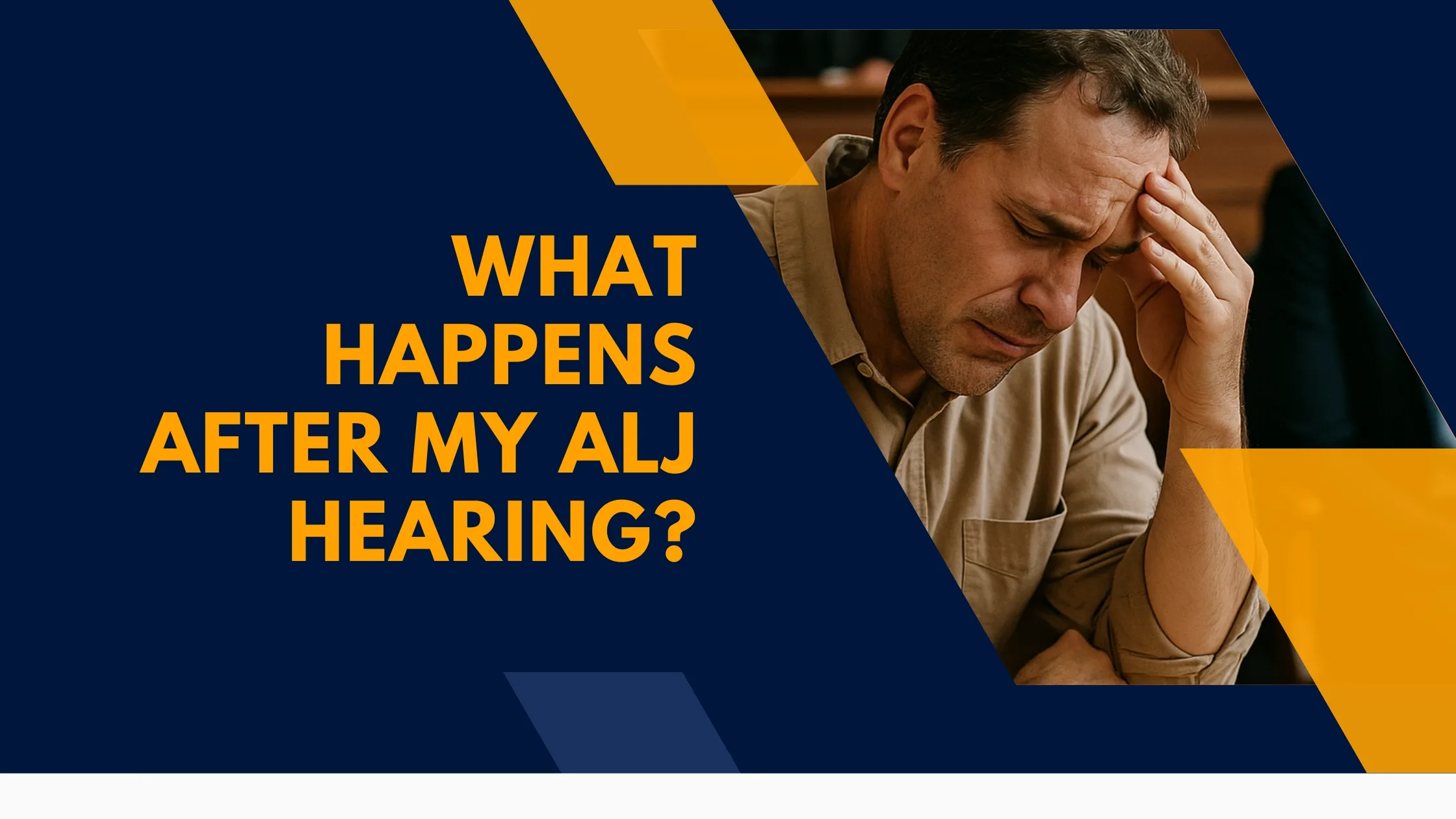
The hearing is over. You testified. The vocational expert spoke. The judge asked their last question and said, “This concludes our hearing.” You walk out of the room or log off the video call with a mix of relief and intense anxiety. The hardest part is done, but now the real waiting begins. This period after the ALJ hearing is often the most stressful part of the entire Social Security disability process.
Your mind races with questions. Did I say the right thing? Did the judge believe me? And most importantly, how long for an ALJ decision? The silence from the Social Security Administration (SSA) can be deafening. Every day, you check the mail, your heart pounding, hoping to see that official envelope. You are not alone in this feeling. This waiting period is a frustrating, opaque process. Let’s pull back the curtain on what is happening behind the scenes. Understanding the “why” can make the “when” a little more bearable.
How Long for an ALJ Decision? The Agonizing Wait Explained
Here is the straightforward answer: The wait for a decision after the ALJ hearing typically ranges from 30 to 90 days. However, this is just an average. Some people get a decision in a few weeks. Others wait four, five, or even six months. It is crucial to know that a long wait is not a sign of a bad outcome. It does not mean you have been denied.
So, why does it take so long? An Administrative Law Judge (ALJ) cannot simply stamp “Approved” or “Denied” at the end of your hearing. They are legally required to write a comprehensive, detailed legal opinion. This document explains their finding of fact. It must detail what medical evidence they found credible, what parts of your testimony they accepted, and how they weighed the expert opinions. This letter is often 10 to 20 pages long. Here is the step-by-step process happening while you wait:
- The Judge Reviews Everything: The judge re-examines the hundreds, sometimes thousands, of pages of medical records in your file. They review their own notes from your testimony. They analyze the statements from the vocational and medical experts who may have testified.
- The Judge Makes a Ruling: The judge makes the final call: “fully favorable,” “partially favorable,” or “unfavorable.”
- The Decision Is Written: This is the biggest bottleneck. Most judges do not physically type out the entire 20-page document themselves. They have a team of decision writers, who are typically staff attorneys. The judge gives the writer their decision and an outline. The writer then drafts the full legal opinion, citing the specific evidence that supports a conclusion.
- The Judge Reviews and Signs: The drafted opinion goes back to the judge. The judge reads it to ensure it accurately reflects their ruling and is legally sound. If they find issues, they send them back to the writer for edits. Once satisfied, the judge signs it.
- Mailing: The signed decision is processed by the hearing office staff and mailed to you and your legal representative.
Ready to discuss your case? Call Bay Legal PC at (650) 668 8000. You can also email intake@baylegal.com or use our online booking calendar to schedule a consultation. We are located at 667 Lytton Ave, Suite 3, Palo Alto, CA 94301, United States. This is attorney advertising. Past results do not guarantee future outcomes.
This entire process is why the question of how long for an ALJ decision is so hard to answer. A simple case with clear evidence may move quickly. A complex case with conflicting medical opinions will take longer. A judge with a heavy caseload will have a backlog. This waiting period is a key reason many people work with a legal representative. An attorney cannot speed up the judge, but they can check the official case status and interpret the decision.
While you wait, you must continue to see your doctors. Do not stop your medical treatment. Gaps in treatment can be harmful if your case ever needs to be reviewed again. Also, be sure to notify the SSA immediately if you move, so your decision letter does not get lost.
The Favorable Decision Letter (And Other Possible Outcomes)
Every piece of mail looks like it could be the one. Finally, a thick envelope from the SSA arrives. Your hands may be shaking as you open it. The letter will be one of three types.
- The Fully Favorable Decision Letter
This is the news you have been praying for. A favorable decision letter means the judge found you disabled as of the date you claimed (your “alleged onset date”). The letter will clearly state that you are approved. It will explain the judge’s reasoning. Crucially, it will state your “date of entitlement,” which is used to calculate your back pay. A fully favorable decision letter is the goal of the entire process.
But the journey is not over. Receiving the favorable decision letter does not mean a check is in the mail. The letter is a recommendation that the SSA’s payment processing center must now act on. Your file is sent from the hearing office to your local Social Security field office. They will calculate your back pay and monthly benefit amount. This step can, frustratingly, take another 30 to 90 days.
If you have questions about your decision, email our team at intake@baylegal.com or call (650) 668 8000. To set up a meeting, please use our booking calendar. Our office is at 667 Lytton Ave, Suite 3, Palo Alto, CA 94301, United States. This is attorney advertising. Past results do not guarantee future outcomes.
- The Partially Favorable Decision
This outcome is confusing and often frustrating. A “partially favorable” decision means the judge agrees you are disabled, but not when you claimed. For example, you may have claimed your disability began in January 2022. The judge, after reviewing the evidence, decides your disability truly “began” in March 2023.
This is a partial win. You are approved for benefits moving forward. However, this change in your “onset date” can drastically reduce or even eliminate your back pay. This is a complex situation. You have the right to appeal the onset date, but doing so can be risky. This is a moment when legal advice is critical.
- The Unfavorable Decision
This is the worst-case scenario. It is a full denial. The judge found that your condition does not prevent you from working. The letter will detail the judge’s reasoning. Receiving a denial is devastating, but it is not the final word. You have the right to appeal this decision. Your next step would be to file a request for review with the “Appeals Council.”
You have a very strict 60-day deadline to file this appeal. Do not miss it. The period after the ALJ hearing denial is arguably the most critical. You must decide quickly whether to appeal or to start a new application.
So, how long for an ALJ decision? The answer is “it depends.” After the ALJ hearing, the process is out of your hands. It is in the hands of the judge and their staff. While you wait, try to focus on what you can control: your medical treatment and your health. When the letter finally arrives, read it carefully. Whether it is the favorable decision letter you hoped for, a partial approval, or a denial, your next steps will be critical.
The payments after a favorable decision letter can also be complex. The SSA will calculate your back pay, and they may subtract money for various reasons, such as receiving other benefits. Then there is the issue of attorney fees, which are handled directly by the SSA from the back pay. Understanding the math on your “Notice of Award” letter is a challenge all its own. It often requires a trained eye to ensure the calculations are correct and you are receiving everything you are entitled to. You have cleared the hearing, the biggest hurdle of all. You have proven your case. But the administrative process that follows, even with a win, is its own kind of marathon.
Take the next step. Schedule an appointment using our booking calendar, or get in touch by calling (650) 668 8000 or emailing intake@baylegal.com. Visit Bay Legal PC at 667 Lytton Ave, Suite 3, Palo Alto, CA 94301, United States. This is attorney advertising. Past results do not guarantee future outcomes.
Frequently Asked Questions About the Wait
1. What is the first step after the ALJ hearing?
You wait. The judge reviews all evidence and testimony. There is nothing you need to do immediately after the ALJ hearing except ensure your contact information is correct with the SSA.
2. How long for an ALJ decision on average?
The national average for how long an ALJ decision is typically 30 to 90 days. However, this can be much shorter or much longer depending on the judge’s caseload.
3. What does a favorable decision letter mean?
A favorable decision letter means the judge found you disabled. It will state your disability onset date and provide information on back pay and the start of your monthly benefits.
4. Will I get a phone call with the decision?
No. You will receive a formal, written decision in the mail. This applies whether you get a favorable decision letter or a denial.
5. Is a long wait after the ALJ hearing bad news?
Not at all. A long wait usually means the judge has a backlog or your case is complex. It has no bearing on the final outcome. Don’t panic over how long for an ALJ decision.
6. What is a partially favorable decision?
This means the judge agrees you are disabled, but on a different date than you claimed. This can significantly reduce your back pay, even though it’s technically a favorable decision letter.
7. What should I do if I get an unfavorable decision?
You have the right to appeal to the Appeals Council. You have a strict deadline, usually 60 days. This is a critical time to seek legal advice, even if you didn’t have it after the ALJ hearing.
8. Who writes the decision letter?
The judge makes the final ruling, but a staff attorney or decision writer often drafts the detailed legal justification. This is part of what affects how long an ALJ’s decision is.
9. I got a favorable decision letter. When do I get paid?
After the ALJ hearing and approval, the file goes to your local SSA office for payment processing. This can take another 30 to 90 days.
10. Should I keep seeing my doctor after the ALJ hearing?
Yes. You must continue your medical treatment. Gaps in treatment, even while waiting for a decision, can be problematic if your case ever needs to be reviewed again.
Attorney Advertising Disclaimer
This website and its contents are for informational purposes only and do not constitute legal advice. Prior results do not guarantee a similar outcome. Every disability matter is unique and depends on specific circumstances and applicable law. Viewing this site or contacting Bay Legal, PC does not create an attorney–client relationship. If you need legal advice, please schedule a consultation with a licensed attorney.